A First Morning in an Unfamiliar Town by Bicycle
Plan a first morning ride in an unfamiliar town around one destination, a few landmarks and room to pause, without turning sightseeing into a race.
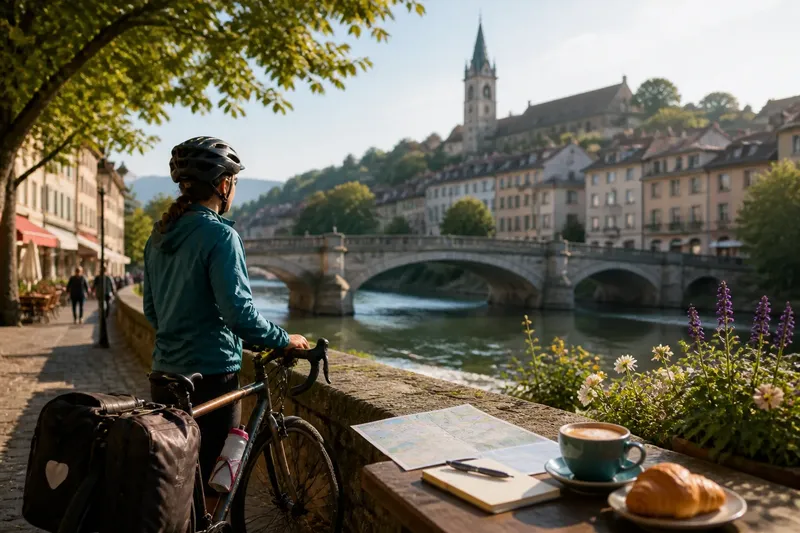
A first morning bicycle ride in an unfamiliar town works best when you choose one destination and let the streets between it and your starting point set the pace. Rather than trying to collect every landmark, plan a short outward journey, a comfortable pause and an easy way back.
This approach suits a town where you have only a morning, a hire bike to get used to or no clear sense yet of how its roads feel. You will still see something beyond the obvious sights, but you can change your mind without having to rescue an overstuffed itinerary.
Choose one destination that gives the ride a purpose
Start with a place that interests you and makes a sensible turning point: a market square, a riverside garden, a harbour, a viewpoint or a café near a public park. Pick somewhere you would be happy to reach even if the ride itself takes a less scenic line than expected.
Check its opening arrangements and whether bicycles can be left nearby. A destination that is closed, crowded or awkward to approach can still be useful as a landmark, but it is better to know that before you set out than to arrive expecting a long stop.
Keep the destination distinct from the ride’s other useful places. A bakery, bridge or station can help you orient yourself, but it does not need to become another compulsory visit. One main purpose gives you permission to stop exploring when the morning has had enough.
Read the town before choosing your streets
Look at a town map or a reliable mapping app and notice its shape before selecting a route. A river, railway, steep ridge, pedestrianised centre or ring road may determine which crossings feel straightforward. These features are more helpful than a long list of attractions because they explain how the town fits together.
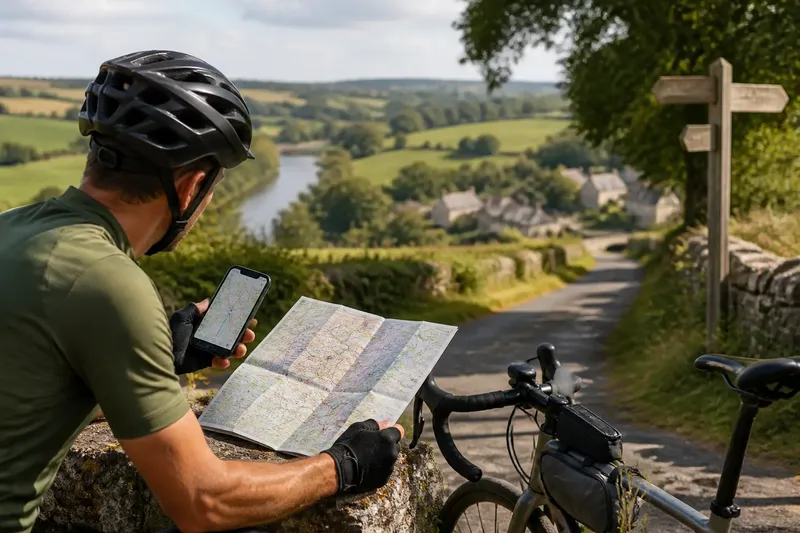
Then check the route using a cycling view if one is available. Look for cycleways, traffic-calmed streets, one-way restrictions, pedestrian areas and bridges that allow bicycles. A line that appears short on a general map may lead through a busy junction or a street where riding is not permitted.
Choose streets you can understand at a glance. A direct, calm road with clear turns can be more relaxing than a supposedly scenic route that zigzags through narrow lanes. If the app suggests a road that looks uncomfortable, compare alternatives rather than assuming the suggested line is the only way through.
Build the outward ride around a few landmarks
Choose a small number of visible or memorable points between your start and destination: a bridge, a square, a distinctive church tower, a canal path entrance or a named park gate. Use them as orientation aids, not as a checklist. If you pass one, you should know roughly where you are without needing to stop and study the map at every junction.
Keep the first stretch simple. If you are starting near a hotel, station or hire shop, get clear of its busiest forecourt before looking for a pleasant lane. Town centres can mix buses, pedestrians, delivery vehicles and cycling restrictions in a small area, so a calm approach matters more than an elegant line on the screen.
Save the destination and the landmarks in your map app, or write their names on a note if you prefer paper. Check where the route crosses a major road or changes from a cycleway to ordinary traffic. Those transitions are the moments most likely to require a brief pause and a fresh look.
Leave room for the town to change your plan
Plan a pause before you leave, but make it a choice rather than a scheduled obligation. A bench in a garden, a café with outdoor seating or a public square can give you time to drink, watch the street and decide whether to continue. A useful stopping place has room to get the bicycle out of the flow of pedestrians.
Say you are staying near a railway station and have chosen a small riverside garden as your destination. You could ride along a signed cycleway, use a bridge as your main landmark and stop at a bakery beside the garden if it is open. If the riverside path is busy or the weather turns, the same bridge gives you a clear point from which to take a direct street back.
That sort of plan keeps the ride coherent without locking you into it. If a market is lively, stay there; if a road feels unpleasant, turn towards a quieter street; if you have had enough, head back. The destination creates a thread, while the landmarks make changes easier to manage.
Make the return route easy to recognise
Do not assume that retracing your outward line will always be the simplest choice. One-way streets, separate cycle lanes, hills or a busy junction may make the return feel different. Before leaving your destination, check the route back and note a recognisable point that will lead you towards your starting area.
A clear return can use a different street without turning the outing into a circuit. For example, you might return beside the river to a familiar bridge, then follow a broad street towards your accommodation. The aim is not to cover more ground; it is to avoid ending the morning with a confusing search for the way back.
Keep your start point saved in the map, and make sure your phone has enough charge for the ride. If the map loses its signal or you stop to look around, use street names and visible landmarks to reorient yourself before moving again. A short pause is easier than trying to read a screen while riding.
What should you check before setting off?
How do you choose a destination?
Choose one place that interests you and is straightforward to reach by bicycle, such as a garden, waterfront or market square. Check its access and opening arrangements, then treat nearby attractions as optional rather than adding them to the plan.
How many landmarks should you use?
Pick only the landmarks that help you recognise the route, such as a bridge or a large public square. If you need to remember a long sequence of turns, simplify the route or save the important points in your map.
What should you do if a street feels wrong?
Stop somewhere safe and check the map before choosing a different street. Do not feel obliged to follow a route just because an app drew it; a clear, permitted alternative is a better choice than continuing through discomfort or confusion.
How can you keep the ride low-pressure?
Leave enough unplanned time for a drink, a view or a change of direction, and decide in advance that turning back is acceptable. The destination gives the morning a shape, not a deadline.
Set off with a simple check and a flexible pace
Before you leave, confirm that the bicycle is suitable for the roads you have chosen, that you know how to operate its gears and brakes, and that your phone or written directions are easy to reach. If you are using a hire bike, ask the provider about its controls and return arrangements. Follow local signs and the bicycle maker’s instructions; rules and access can vary from town to town.
Start gently and get used to the bike before entering busier streets. Give yourself time to look for signs, pedestrians and turning traffic, and stop in a safe place whenever you need to check directions. If the town has a marked cycle route, follow its signs where they match your destination and comfort.
A first morning ride in an unfamiliar town does not need a packed itinerary to feel complete. Pick one worthwhile destination, use a few landmarks to stay oriented and protect time for a pause. When you know how to return and are willing to alter the route, you can notice the town as it is rather than race through it as a list of places.
Before heading out, also note where you can leave the bicycle securely at your destination. A visible rack near the entrance is often more useful than arriving at a beautiful stop and having to spend your pause searching for somewhere appropriate to lock up.