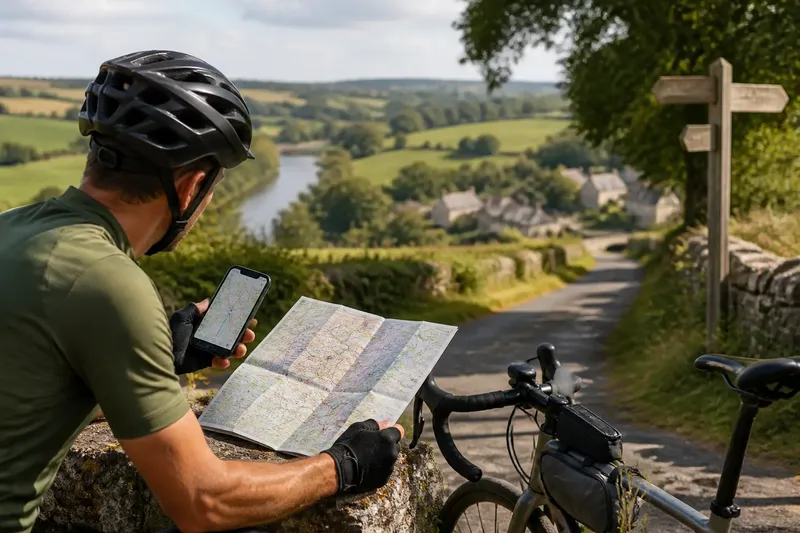
From Touring Panniers to the Small Handlebar Bag
Touring panniers and compact handlebar bags reveal how cyclists choose what to carry, balancing self-sufficiency on a journey with room for ride-day essentials.
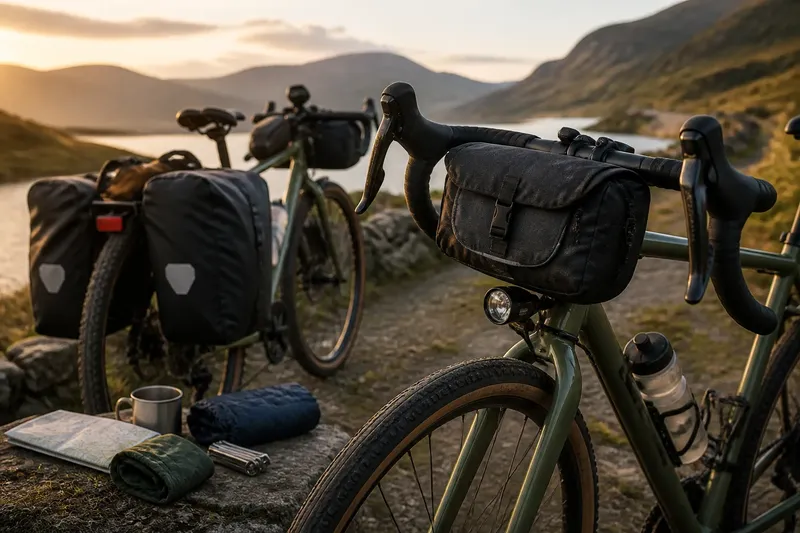
Touring panniers and the small handlebar bag express two different answers to the same question: what should a bicycle carry? Panniers make room for the belongings that keep a rider self-sufficient over a journey; compact handlebar bags keep a few useful things close on a shorter outing. The change is not simply from large luggage to small. It reflects a shift in how riders define what belongs on the bike.
Touring panniers make the bicycle a travelling home
A pair of panniers hangs from a rear rack, with larger touring setups adding front panniers or a bag across the rack. The arrangement gives a rider space for clothing, food, tools and sleeping equipment, with weight divided between sturdy bags rather than balanced in a rucksack. The bicycle becomes a way to carry the practical contents of a trip.
That capacity suits journeys where the rider expects to be away from home for days, needs to bring varied clothing, or cannot count on replacing supplies along the route. It also changes the rhythm of preparation: gear is sorted into categories, packed into separate compartments and secured before departure. A pannier can hold the less frequently needed items while a smaller bag keeps a map, snack or wallet accessible.
Touring luggage is not just a larger version of day storage. A full pannier load affects how a bicycle feels when lifted, parked or steered at low speed. Riders generally need to think about rack compatibility, how the bags attach, and whether the load sits securely rather than swinging against the frame or wheel.
Compact storage treats the ride as a lighter outing
A small handlebar bag puts a limited selection of belongings near the rider’s hands. Depending on its design, it may carry a phone, keys, a light layer, a snack and a compact repair item. Some bags detach for use away from the bicycle, while others stay mounted and open through a flap or zip.
The compact format makes a different promise: take what supports this ride, rather than pack for every possible need. It suits a familiar route, a short spin after work, or an outing where food and shelter are expected along the way. The bag’s modest capacity can make choices more visible. A bulky spare layer or an extra pair of shoes may simply have no place there.
Its position is part of the appeal. Essentials can be reached without opening a bag behind the rider, and the contents remain in view when the bicycle is parked nearby. But the handlebar area has its own limits: the bag must not obstruct the rider’s view, interfere with cables, or crowd controls. The maker’s fitting guidance matters for the particular bicycle and bag.
Capacity changes what counts as a sensible belonging
With touring panniers, riders can carry things whose usefulness is uncertain but whose absence could make a long trip uncomfortable: a warmer layer, spare food, or clothing for a change in conditions. This is not automatically wasteful. On a journey with few resupply options, carrying more may be the sensible choice.
With a compact bag, the same decision is sharper. A rider may choose a thin waterproof layer over a second snack, or carry a small lock only if there is a likely stop. The bag does not decide what matters; it makes the trade-off harder to ignore. A useful packing question is not “What might I possibly need?” but “Which items serve the route I have chosen?”
Imagine a rider heading out for a familiar afternoon circuit with a café stop planned. They put a phone, keys, a card, a snack and a light shell in a small handlebar bag, leaving spare clothes and cooking gear at home. The likely result is a tidy load that is easy to access, while the planned stop provides a practical break rather than requiring the rider to carry a full touring kit.
Now change the starting point: the rider is setting off on a multi-day trip with uncertain food stops and nights away. A compact bag can still hold immediate essentials, but panniers make room for the additional clothing, provisions and equipment the journey calls for. These are not rival ideals; they answer different demands.
Bag placement shapes access and the feel of a bicycle
Rear panniers are familiar because a rack provides a stable place for substantial bags. Front panniers can help distribute a large touring load, but the added weight affects steering and should be considered as part of the whole setup. A handlebar bag keeps small items close at hand, though a heavily loaded or poorly fitted bag can make the front end feel awkward.
Other luggage occupies the space between those forms. A frame bag uses the central triangle of the bicycle, while a small saddle bag can carry a repair kit or other compact essentials. These options may reduce the need to put everything on the bars or in a rucksack. They also depend on frame shape, bottle access, rack fittings and the size of the items being carried.
Access matters as much as capacity. A snack needed during a ride belongs somewhere reachable without unpacking clothes. A spare layer can sit deeper in a pannier if it is only likely to be needed at a stop. Separating frequent-use items from reserve gear reduces rummaging and helps a rider notice if something has been left behind.
Why do riders choose different bicycle bags?
Are panniers only for long-distance touring?
No. Panniers can be useful for shopping, commuting or carrying bulky items, provided the bicycle has a compatible rack and the load is appropriate. Their defining feature is capacity, not the length of the journey.
Can a small handlebar bag replace touring panniers?
It can replace them when the trip needs only a few small belongings and other needs are already covered. It is unlikely to serve as a complete substitute when the rider must carry substantial clothing, food or overnight equipment.
What should go in a handlebar bag?
Choose items that are compact, useful during the ride and convenient to reach, such as a phone, keys, snack or light layer. Keep the contents light enough that the bag remains manageable, and check that it does not block sightlines or interfere with controls.
Do bicycle bags need to match?
No. A touring setup can combine different bags if each has a clear job and attaches securely. A handlebar pouch for quick access and panniers for bulky gear may be more useful than a matching set chosen only for appearance.
Choose luggage around the journey, not an image of it
Touring panniers can carry the independence a longer journey calls for; a compact handlebar bag can keep a modest ride’s essentials close. Neither format makes a bicycle trip more authentic. The useful distinction is whether the luggage fits the route, the expected stops and the belongings the rider actually wants along.
For touring panniers or a small handlebar bag, make the final choice by laying out the items for the specific outing, then assigning each a place before loading the bicycle. If the essentials fit in a compact bag, carrying a larger system may add unnecessary bulk. If the list includes overnight or contingency gear, plan for its secure transport rather than hoping a small bag will stretch to suit it.
That simple check keeps luggage in its proper role: a quiet support for the journey, not a measure of how serious the ride ought to look.