Why a Loop Can Make a Ride Feel Like a Journey
A well-shaped cycling loop turns changing scenery and a clear return point into a journey, with a simple way to sketch its beginning, middle and finish.
A cycling loop feels like a journey when each stretch changes what you see and the return gives the ride a clear destination. A route that bends back to its start can do more than avoid retracing the same road: it can give the day a beginning, a middle that moves away from familiar ground, and a finish that feels earned.
A loop needs a reason to turn back
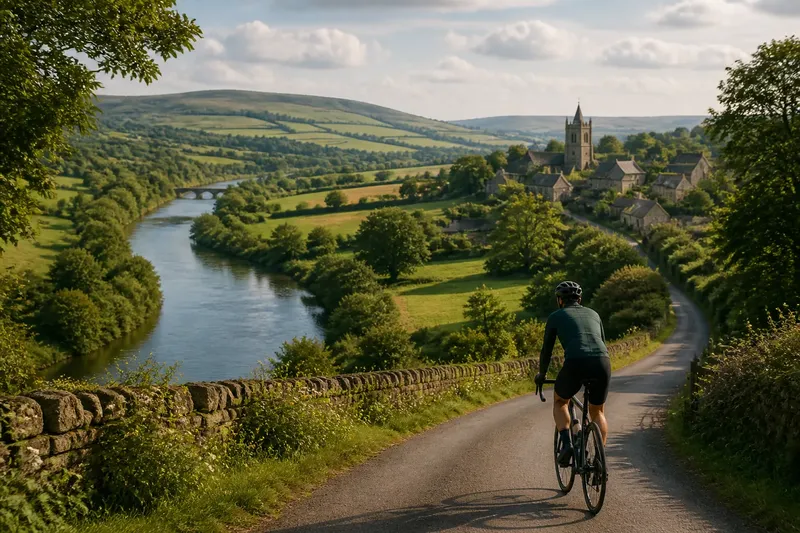
Imagine you are planning a leisurely ride from a village green. A river path runs east, while quiet lanes cross the fields and return from the north. Rather than drawing the shortest possible circle, you decide that the outward leg should follow the water, the middle should reach a village on higher ground, and the return should come through farmland.
That choice gives the loop a simple story. The river is a comfortable opening, the climb changes the view and marks the point furthest from home, and the lanes bring you back by a different approach. The route’s shape matters less than the reason for each change in direction.
Start by choosing a place to return to that is easy to recognise: a village green, railway station forecourt or signed car park. It should be a useful finish as well as a starting point, with somewhere to pause or make a practical onward connection if needed.
Give the beginning, middle and finish different jobs
Sketch the route in three broad parts before deciding on every turn. The beginning should settle you into the ride, the middle should create a noticeable change, and the finish should guide you towards the return point without simply replaying the opening.
- Beginning: Choose a straightforward way out, such as a riverside path or a quiet lane across familiar fields. Keep the early route easy to follow so you can find your rhythm.
- Middle: Aim for a distinct feature that changes the scene: a ridge, a wooded stretch, a canal junction or a village square. This is the point where the ride should feel as though it has gone somewhere.
- Finish: Draw a different line back, perhaps using a valley lane or the far bank of the river. Leave enough variety that the approach to your starting point feels like a return rather than a rewind.
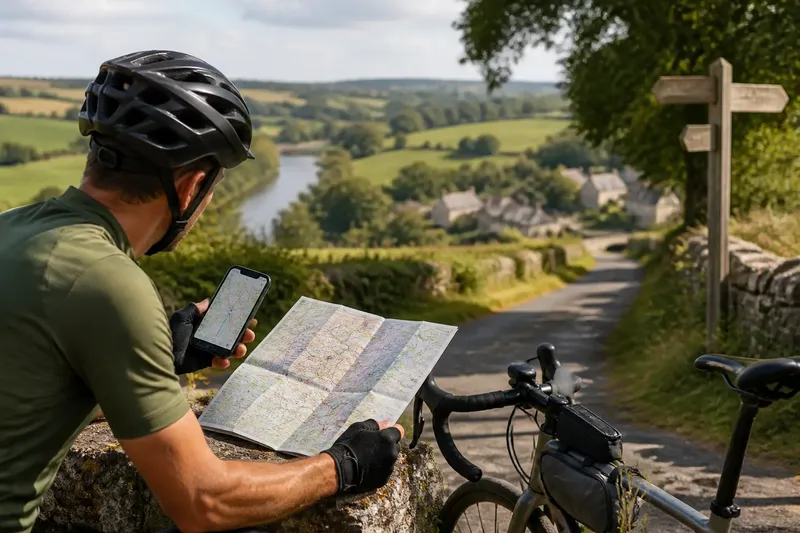
On a paper sketch, mark these three parts with simple labels and connect them with rough lines. Then check a detailed cycling map for surface type, crossing points and whether the roads or paths actually join. The sketch helps you judge the experience; the map helps you check that the route can be followed.
Use changing views to make progress visible
Progress is easier to feel when the landscape changes in stages. In the invented village ride, the river could gradually give way to open fields, then a lane could rise towards a church tower visible above the village. The landmark offers a visual cue that the middle of the ride is approaching, without requiring a formal stop or a complicated navigation plan.
Think about what the rider will notice from the saddle. A bend that reveals a broad view, a bridge crossing or a change from sheltered trees to open farmland can mark a transition. These details need not be famous attractions; they simply make one stretch distinct from the next.
A loop can also make returning ground look different. The river may have been beside you on the way out, but from the opposite bank it becomes a view across the route you have already ridden. That change in angle makes the return leg part of the experience rather than an administrative trip back.
Choose a return that feels connected, not repetitive
For the hypothetical route, the outward leg follows the river east. At the village, a lane turns south through open fields, then a signed path leads west along the other side of the water. The route returns to the green from the north, so the rider recognises the starting place but arrives with a changed view and a sense of having crossed a larger landscape.
When drawing a return, look for a natural connector: a bridge, a lane between villages or a path that follows a different side of a feature. If the only practical way back uses part of the outward route, consider repeating a short section and making the rest distinct. A little overlap is less tiring than forcing a poor or confusing detour.
Also make sure the loop has a sensible turning point. A named village, bridge or trail junction is easier to remember than an arbitrary spot on a long road. If the route feels too open-ended on the sketch, add a clear landmark at the point furthest from the start.
Check whether the loop works on the ground
A tidy shape on a screen can hide awkward details. Check that the chosen paths are open to cycling, that a river crossing is actually available and that a quiet-looking road does not lead into a busy junction. Look at the surface as well: a narrow trail may be a poor fit for a bicycle with narrow tyres or for a rider who wants an unhurried ride.
Keep a practical alternative in mind if weather, a closure or a tired group makes the original return unappealing. A nearby station or a shorter lane back can preserve the day’s shape without turning the plan into a test of endurance. Adapt the route to local access rules and the relevant path or road guidance.
Say you sketch the village loop and then notice that the far-bank path ends before the bridge. You could revise the middle to cross at the village and return by the same bank, using a different field lane to make the final stretch distinct. The observable result is a route with a clear landmark and a workable way home, even though the first drawing needed changing.
Why does a loop feel more satisfying than an out-and-back?
Does a loop need to be a perfect circle?
No. A loop can be lopsided, with a longer outward leg and a shorter return, as long as it closes at a useful point. A readable sequence of places matters more than geometric neatness.
What makes a good turning point?
Choose a recognisable place that marks a change in the ride, such as a village, bridge or viewpoint. It should help you understand where the middle ends and the return begins.
Can a loop include the same road twice?
Yes, a short repeated section can be the clearest or safest connection. Make the remainder different where practical, so the return still offers a changed view or a fresh approach.
How do I know if the route is too complicated?
If the sketch needs many small turns to explain it, simplify the line or choose stronger landmarks. A route with a few clear transitions is easier to remember and more likely to feel coherent while riding.
Let the return point complete the day
In the imagined ride, the green is not merely where the bicycle was left. It is the place reached after the river, the climb and the fields have made a sequence. Arriving from another direction makes the familiar starting point feel like a destination.
When you plan a cycling loop, begin with that return point, then give the outward leg and middle distinct roles. Add a landmark where the scenery changes, draw a practical way home, and check the connections before setting off. A strong loop does not need elaborate scenery or a perfect shape; it needs a route whose changing views make the return mean something.